Cowslips

The cheerful primroses which are in the same family as cowslips graced woodland edges, hedgerow bottoms, roadside verges and embankments from March to April.

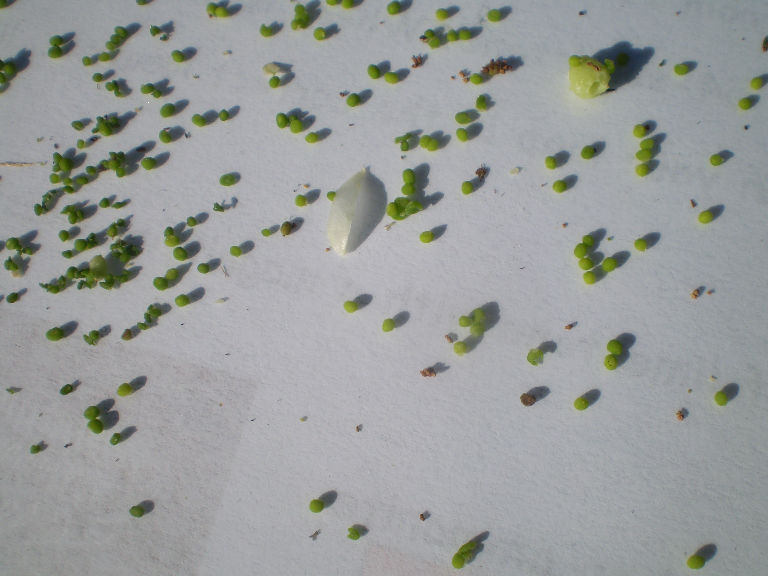
As their flowers fade tiny green seeds form in the fruiting capsules at the base of the plants. 

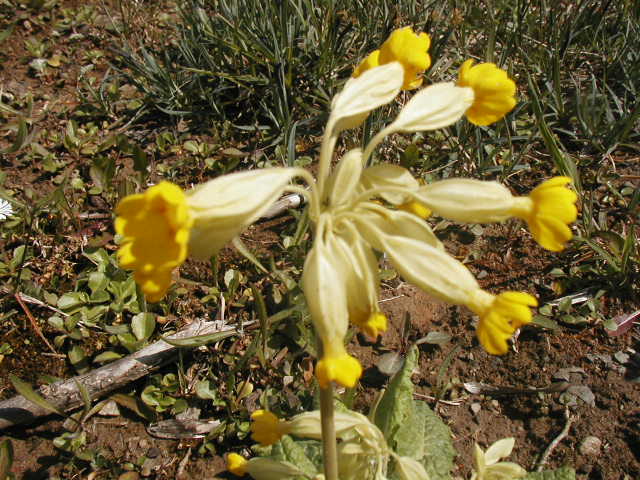
Meanwhile its close relative, the cowslip, (Primuls veris) has arrived on nature’s stage since late April to display its sweetly scented flowers until June.  These hang in clusters on strong stems.  Cowslips favour more sunnier places than the shade-loving primroses and are found on sunny roadside embankments, parks and fields that are not overly fertilized. They were once very common in the Irish countryside but not so anymore.  The name of the plant has its origin in an old English word for cow-dung-cow-slop.  It was often found in fields where cows grazed.

It is illegal to dig up wildflowers that are growing in the wild, but their seed can be collected.  Primrose seeds should be sown fresh for quick germination.  Break open the seed capsule in June and press the green seed into the compost of a tray filled with John Innes seed compost.  Cover with Perspex or glass and leave in a slightly shaded spot.  Transplant to 7.5 cm pots of John Innes No.1 when they have four leaves.

When the seed cases are turning brown the stems begin to bend.  The seeds are no longer green.  These can be sown in a similar way, but they will not germinate until the spring.

Treat cowslip seed in a similar way to the primrose seed.

Primroses
Primrose seed
Primrose capsules
Cowslip
Cowslips

Similar Posts

  • Bluebells

    May is the month for observing broad swathes of bluebells carpeting old woodlands and running along the edges of old hedgerows.  They emit a sweet scent and are pollinated by insects, especially bumblebees.  The native Bluebell (Hyacinthoides non-scripta) has bell-shaped flowers on one side of a drooping stem.  The flowers are a deep blue tending…

  • Flowers

    The barely noticeable cross shaped white flowers and nettle-shaped leaves of Garlic mustard (Alliaria petiolata) or Hedge garlic on the road verge do not command the attention of most passers-by.  Nonetheless, this is an extremely important plant for the caterpillars of the Orange tip (Anthocharis cardamines) butterfly.  In May these eat the pods and seeds….

  • Unfolding buds

    Beech buds (Fagus sylvatica) are among the last to unfold in spring.  The lovely, soft, silky, lime-green leaves slowly emerge from the cigar-shaped buds. Some people find these leaves very tasty when they are at this stage of development. The black ash buds (Fraxinus excelsior) are slow to open too because the young, delicate leaves are…

  • Butterflies

    The Orange tip (Anthocharis cardamines) butterflies have been active since late April.  The male is easy to recognize with bright orange tips on its forewings. The female, however, does not have the male’s orange markings. Instead she has dark grey wingtips with a black spot in the centre of each forewing.  Her hind wings are…

  • Connecting with Nature today

    A dry, sunny spring day.  Egg-shaped Sycamore buds beginning to open and unfold fresh, pinkish coloured leaves. The Coltsfoot which some people confuse with the dandelion in full splendour. (The leaves resemble a foal’s foot). Noticed the Greater stitchwort with its star-like petals weaving through the hedgerow for the first time this year.  The hawthorn…

  • Buds of April

    New life unfolds in April.  Buds continue to open in woods, hedges, parks and gardens displaying the new, fresh growth within. The black, hard leaf buds of Common ash (Fraxinus excelsior) are among the last to open.  Nonetheless, buds do open on the ash, but these are the flower buds.  In the picture the female, spiky,…